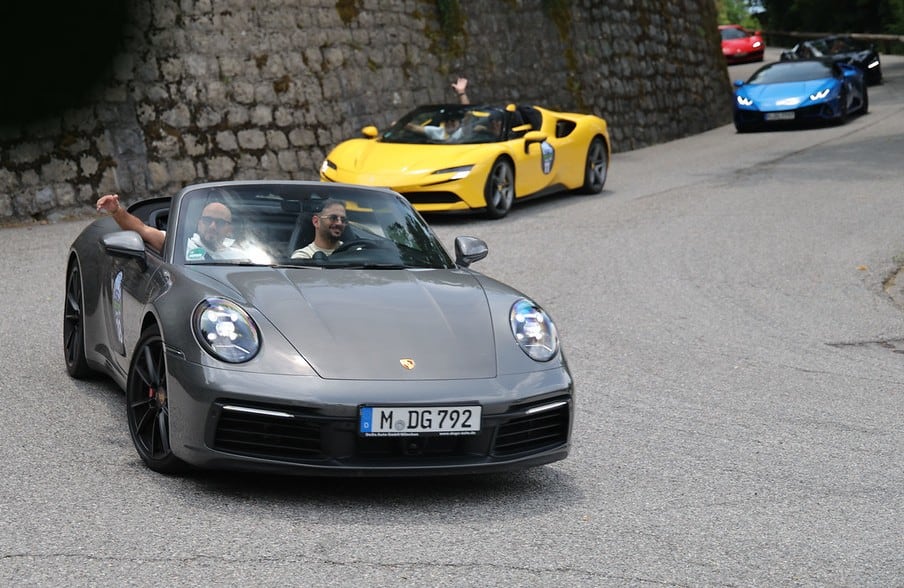
Once a year, the streets of Monaco close and become the most famous circuit in Formula 1. The other 361 days, they’re just streets — and you can drive every corner of them.
The same corners, no red flag required
Sainte Dévote, the tight right-hander that opens the lap on television every May, is a normal intersection the rest of the year. Casino Square, where F1 cars crest a blind rise in front of the Casino de Monte-Carlo at genuine speed, is a public square you can simply drive through. The Fairmont Hairpin — the tightest corner in the entire Formula 1 calendar, taken by race cars at barely walking pace — sits right outside the Fairmont Monte Carlo, and it’s exactly as tight in a rental car on a Tuesday afternoon as it is during the Grand Prix.
The tunnel, and the harbor chicane
The tunnel under the Fairmont is a genuine public road tunnel — one of the only sections of the entire circuit where F1 cars actually reach high speed, since almost everywhere else on the lap is defined by tight, low-speed corners between buildings. Coming out of the tunnel into daylight, the circuit runs along the harbor toward the chicane and Tabac corner, with the same superyachts the rest of Monaco is known for lining the water just meters from the road. It’s a genuinely strange feeling the first time: driving a corner you’ve watched on television, at your own pace, with nothing marking it as special except your own knowledge of what it is.
What’s changed, and what hasn’t
The circuit has evolved since the first Monaco Grand Prix ran this exact street layout in 1929 — the swimming pool complex section was added in 1973 when land reclamation extended the harbor, and safety barriers and run-off areas have been updated repeatedly over the decades. But the fundamental character hasn’t changed: this is still, nearly a century later, a circuit built entirely out of a real city’s actual streets, not a purpose-built track wearing a city’s name.
Driving it for real
There’s no special permit required and no track day booking — Rascasse, Anthony Noghès, the harbor front, all of it is simply Monaco’s ordinary street grid, available to drive any day the Grand Prix isn’t actually running. The corners feel smaller in person than they look on television, and considerably tighter than the speeds F1 cars carry through them would suggest to anyone who’s only ever seen the circuit from a broadcast angle.
Driving the F1 circuit’s own streets is a natural pairing with the Supercars Rally Monaco or a standalone Monaco rental. Get in touch to plan a route that includes it.