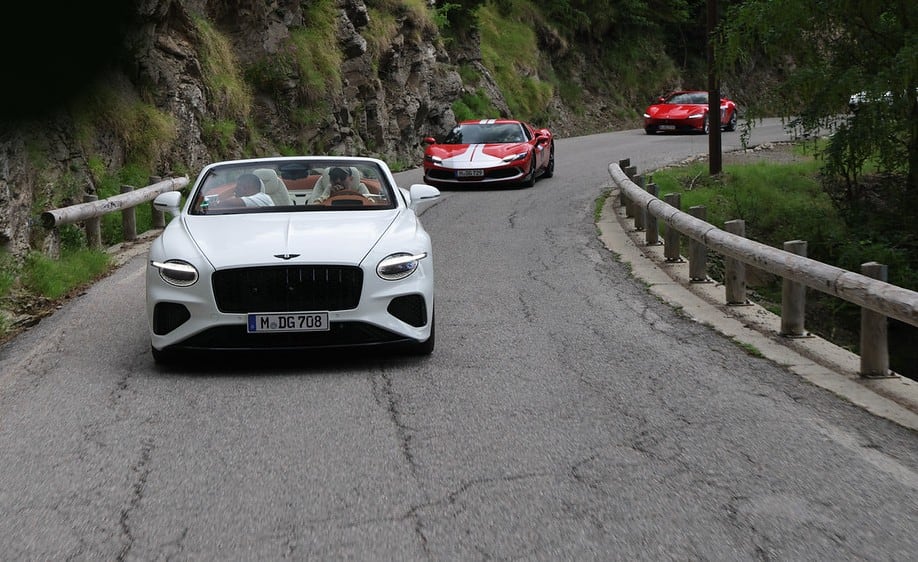
Four driving days on the Porsche Europe route. Four spa hotels, one per night. That’s not a coincidence, and it’s not incidental luxury bolted onto a driving itinerary — it’s arguably as central to how this route was built as the roads themselves.
A tradition older than the cars
Alpine wellness culture in this region predates the driving tourism industry by well over a century — mineral spring resorts and mountain sanatoriums built specifically around the therapeutic properties of altitude, cold water, and heat cycling were drawing visitors to South Tyrol and Tirol long before anyone thought to build a driving road through the same mountains. What guests experience at a property like Quellenhof or Interalpen-Hotel Tirol isn’t a generic hotel spa menu — it’s a specific, decades-refined rhythm of sauna, cold plunge, and rest that developed in exactly this climate for exactly this altitude.
Why it actually fits a driving-intensive route
It sounds counterintuitive at first — pairing a physically demanding driving day with an entire evening built around rest and recovery — until you’ve actually driven a mountain pass at altitude for six or seven hours. The concentration a technical alpine road demands, combined with genuine altitude effects most guests aren’t used to, is a real physical load, not just a figure of speech. Heat-and-cold cycling is specifically effective for exactly this kind of fatigue — the kind that comes from sustained focus and altitude rather than pure physical exertion — which is precisely why Alpine cultures built recovery rituals around it centuries before sports science had a name for what was happening.
The four stops, one rhythm each night
Interalpen-Hotel Tirol, the route’s opening night, is widely considered Austria’s most legendary spa hotel — the property that sets the tone for what the rest of the week’s evenings will feel like. Wellness & Spa Resort Quellenhof in South Tyrol follows the Timmelsjoch driving day, timed deliberately for the evening after the route’s most demanding alpine pass. The Secret Sölden adds golf alongside its spa facilities, near the Dolomites. Laschenskyhof closes the spa rotation on day 4, after Grossglockner and a helicopter flight over the alpine peaks — arguably the evening guests most look forward to by that point in the week.
Not a spa vacation with driving attached
The distinction matters: this isn’t a wellness retreat that happens to include some driving, nor a driving tour that happens to have decent hotels. The two halves of each day are built to genuinely complement each other — a demanding morning and afternoon behind the wheel, followed by an evening specifically designed to let the body recover before doing it again the next day. Guests who’ve done the full route consistently describe the spa evenings as essential to being able to drive at full intensity again the following morning, not an optional add-on they could easily skip.
This rhythm is built into all 6 days of Pure Adrenalin’s Porsche Europe Road Trip. See the full route.